Badar Al Abri
Wednesday, October 21, 2026 AD
There is a profound difference between thinking with a mindset of renewal and thinking with a mindset of destruction and war. There is a difference between humanizing one’s outlook toward oneself and others—rejoicing in peace, stability, and development wherever they occur on earth—and living within closed affiliations and divisive binaries, seeking stability for one’s own country through the destruction of other countries, the plundering of their resources, and the stripping away of their security and stability. There is also a difference between living in the present with the knowledge and understanding of the present and wanting people to live by the mindset of the past; between pursuing progress and renewal with today’s tools and glorifying the past while reviving historical conflicts that have no relevance today.
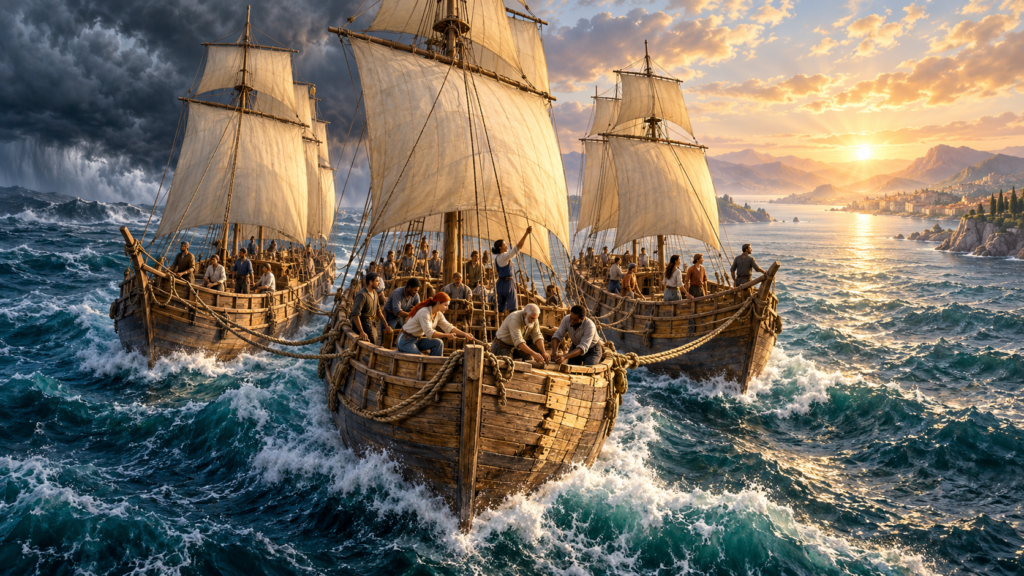
We have three interconnected ships: a global ship, a ship of shared nationhood, and the ship of the individual nation-state. The wise seek to keep all three sound, for any breach that causes one to sink affects everyone, near and far. The same universal laws govern us all. The harm caused by disregarding these laws reaches people across the earth; neither religion, language, nor identity offers protection. Disease, for example, threatens everyone when people fail to take preventive measures, while the damage caused by wars reaches even those far from their battlefields.
Aboard the global ship, human beings free themselves from every affiliation that excludes others or asserts superiority over them, whether based on ethnicity, religion, language, or culture, regardless of country, outlook, or color. There is a difference between taking pride in one’s affiliations and making another person’s survival, happiness, and rights contingent upon them. Such pride is a natural right. Yet it becomes a curse when collective reason is held captive by it and it is turned into a political instrument embraced by narrow-minded politicians. What should be a natural source of diversity and richness then becomes conflict and hatred, leading to violence, exclusion, tyranny, and war.
Those who board the global ship do so as human beings. Everyone aboard is equal, and their cultural and ethnic diversity creates beauty, richness, and enjoyment, reflected in tourism, literature, cinema, and intellectual debate. Boarding this ship is like boarding an aircraft or traveling by coach through different countries: passengers are not questioned about their cultural and intellectual backgrounds beyond what is needed to establish their identity. Everyone feels safe, without discrimination between themselves and their fellow travelers.
If everyone recognized the importance of the global ship, abandoned hate speech, discrimination, and deadly binaries, reconsidered their religious and cultural discourse, and moved beyond both the distant historical events invoked to promote hatred and violence and the painful events preserved in recent memory, this would influence politicians in the long run. Unless ideas emerge from below, through reasonable and wise people, the resulting vacuum will be filled from above by those who stand to benefit, whether clerics, merchants, politicians, or others.
If people cannot restrain those who breach the global ship by spreading hate speech, igniting wars, and discriminating between human beings, they must preserve what connects them to others through culture, language, history, and geography: the ship of shared nationhood. This ship, whose passengers may differ in ethnicity, country, religion, and denomination, offers security to everyone aboard. Any chaos, warfare, or destruction within it will inflict the greatest harm on those most closely connected to it. Equally, they will benefit from any stability and growth it achieves.
A reasonable and wise person helps restrain those who call for chaos, hatred, violence, and warfare aboard this shared ship. Such a person does not contribute to breaching its hull through writing, art, public office, or professional position, but fully understands the importance of its renewal, development, and stability, and recognizes that the benefits extend to all.
If this, too, fails because politicians and vested interests prevail, igniting wars and spreading rhetoric of violence, hatred, and discrimination, reasonable and wise people must hold fast to the ship of the nation-state. It is their last lifeline in a sea turbulent with chaos and warfare. Should this ship be breached, their plight may count for little in the wider world. Yet it is their safe home, the home of their children, grandchildren, and generations to come. Even when life within it becomes difficult, the homeland’s embrace remains far more spacious.
They must first recognize that this ship rests upon national unity. Virtually no state in the world has only one identity. It is natural for a country to encompass different identities, affiliations, and cultures, while the shared identity of the homeland unites everyone as a single whole. Abandoning this unifying identity for divisive identities may lead, God forbid, to internal civil and sectarian warfare. Conflict among a country’s own communities differs from conflict with external forces. The former is difficult to escape, destroys everything, and halts development, progress, and renewal for decades. Generations are then condemned to ignorance, disease, and poverty through no fault of their own, because of the suffering brought upon them by profiteers and the shortsighted.
Anyone reflecting on today’s world and our place within it as Arabs will find that our circumstances fall within these three ships. Aboard the global ship, Eastern and Western powers compete for political and economic interests and concealed colonial ambitions, while the far right gains ground and cultures and ideologies are imposed through digital technologies and artificial intelligence.
Our Arab ship, meanwhile, is in a sorry state. Much of the Arab world has fallen behind in knowledge, production, industry, renewal, and investment. It has been consumed by the destruction of many of its countries, internal conflicts, and the displacement of large numbers of its people, alongside the growth of hardline religious discourse and ideological movements, and rising poverty, ignorance, and disease among many of its inhabitants.
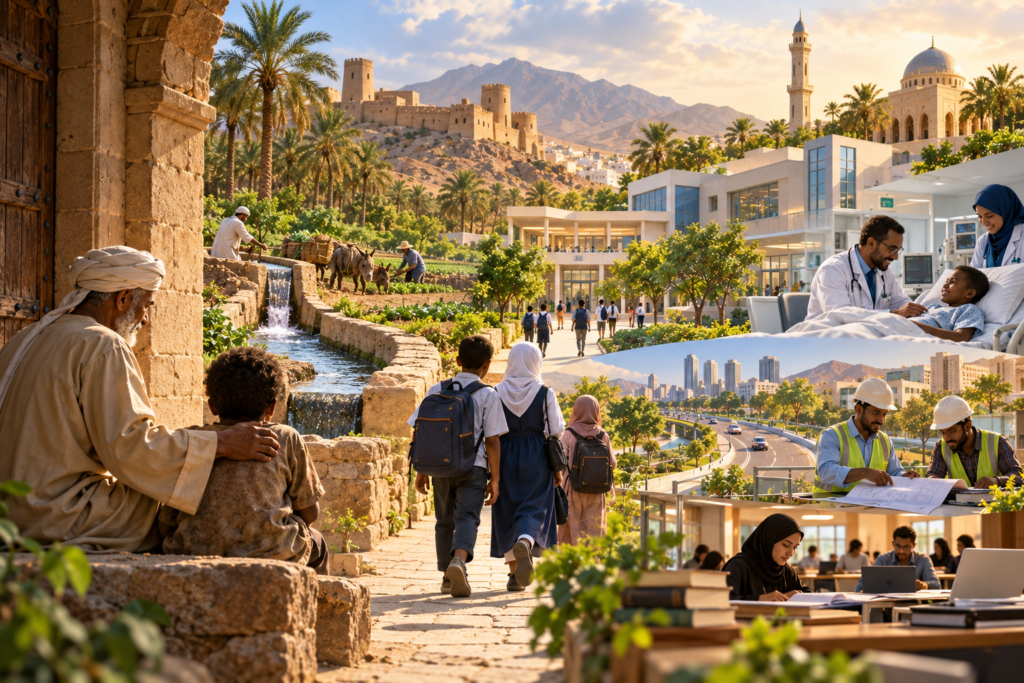
We are therefore left to consider the ship of the nation-state. Some seek to extend devastation and destruction to the remaining countries that still enjoy a measure of stability and development. We must all recognize the danger of calls to hatred and warfare, beginning by safeguarding this national ship. We must then approach our shared Arab ship with a mindset of renewal and stability, recognizing that its stability, and our contribution to its renewal and development, also safeguard our own national ship.
Aboard the global ship, we should be receptive to what is good and advocate peace and love among all the world’s peoples. We should humanize our concepts, heritage, and culture so that their purpose becomes the development and flourishing of human beings simply because they are human. We should move beyond narrow readings of history and closed religious and cultural concepts by humanizing them and rereading them in light of present realities. We should contribute to human development through the knowledge and sciences the world has attained—in the humanities as well as in applied, experimental, and industrial fields—so that we become an active force for renewal rather than insularity and warfare.
Note: This translation was produced using artificial intelligence (AI).