



Badar Alabri
After October 7, 2023, the term “Zionization” began to be widely used against anyone who expressed a critical opinion about the event, even if that person had no connection to Israel. Even criticism of the thinking of certain activist movements was sometimes labeled as “Zionization.”
Today, after the recent war between Israel and the United States on one side and Iran on the other, and the Iranian strikes that affected the Gulf, another term has emerged as the counterpart of Zionization: “Iranization.” It is now used against anyone presenting a different reading of events.
Thus, people find themselves facing two opposing labels: Zionization and Iranization. One may either align with the dominant wave in the country where one lives, according to the policies of the state or the noise of digital popularity and social media approval, to avoid being accused of one of these labels—or remain silent to escape this noise and categorization.
Yet one of the most harmful things to human knowledge is identity-based classification, which prevents writers and researchers from exercising free criticism. They become constrained either by political, religious, or social pressures, or by the noise of collective thinking that dominates the moment, rather than by the independence of knowledge itself.
In most countries of the world, there are three perspectives on current events:
The perspective of the central state, which deals with external crises according to its perceived interests and its political and diplomatic principles.
The perspective of independent research centers and independent scholars, who often enjoy greater freedom to criticize and analyze, with varying degrees depending on the country’s policies. Their role is to create analytical readings beyond the single official viewpoint.
The populist or interest-driven perspective, historically described as superficial or chaotic discourse. This is often tied to political parties, religious sects and their leaders, political interests and fears of opposing them, ideological activism from the right or the left, or emotional agitation through images, art, or inflammatory rhetoric.
In the Arab Gulf states, political discourse is often dominated by a single paternalistic political vision, while independent research perspectives are weak—sometimes to the point of near absence.
This paternal political framework may occasionally allow some space for public discussion, leading to a broader spread of superficial populist discourse—even if it contradicts the central state’s view. However, this discourse rarely goes beyond the noise of social media. Alternatively, the space may shrink so that public discourse remains limited to immediate narratives aligned with state policy, sectarian viewpoints, or populist trends.
As a result, societies become preoccupied with imaginary conflicts and vague classifications, while independent critical research thinking disappears—thinking that is neither politicized nor captive to populist noise that suffocates free critical thought.
Such situations naturally emerge during times of crisis. One example is the weakness of political analysis produced by Gulf nationals themselves, which often leads media outlets to bring analysts from abroad to interpret events. Some of these analysts may defend a certain policy during a particular moment, only to adopt different positions at another time according to changing interests. This observation is not meant as a generalization, but it is evident to anyone who follows the shifting dynamics of events.
In my view, the weakness of Gulf political analysis stems from four main reasons:
The failure to distinguish between the official state policy and the views of independent researchers and civil research centers. The latter does not necessarily represent the official policy unless the individual is an official spokesperson.
The absence of independent research centers, which naturally weakens independent civil analysis and pushes discourse toward populist interest-driven rhetoric.
The limited space for independent opinion and freedom of expression, which pushes civil voices—already lacking strong institutional support—toward sensationalism and superficial discourse.
The dominance of populist discourse itself, sometimes fueled by activist organizations outside the Gulf region. With digital media and social networks, it has become easy to spread narratives aimed at creating chaos and division in the region.
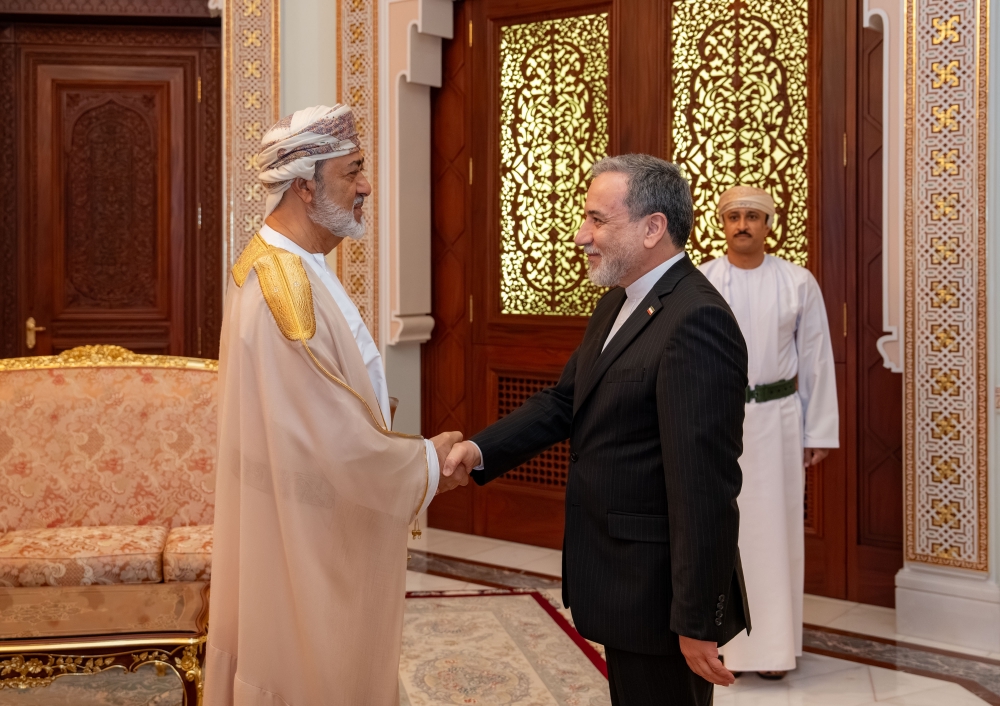
What we see today in the populist discourse surrounding Oman’s position in the recent war is as if Oman were a newly born state with no central decision-making authority, or as if Oman supported the destruction of the Gulf household. Such readings are superficial and hold little value.
All Gulf states share a council, geography, and cultural proximity, yet each state retains its own political vision and policies, as is the case everywhere in the world.
Oman did not emerge only after 1979 to become a product of the Iranian revolution. Its vision regarding war was not shaped solely by the recent conflict. Oman has long maintained independent positions in regional affairs.
For example, it supported Kuwait during the Gulf War because Kuwait had been attacked. At the same time, it stood with Iraq against the American invasion. Oman distanced itself from the Yemen war, yet it rejected any threats to regional security, recognizing that instability in Yemen inevitably leads to instability in the Gulf.
In the recent war, Oman understood that war leads to chaos that harms the nearby before the distant. Therefore, for more than three decades it has sought to extinguish conflicts and continues to pursue this path today and in the future.
At the same time, Oman condemned attacks on the Gulf, sought solutions regarding the Strait of Hormuz, and avoided inflammatory media rhetoric or divisive classifications such as “either you are with me or against me.” Instead, it respected the central policy decisions of its fellow Gulf states.
This respect has not prevented Oman from maintaining an independent vision regarding the region and the Arab world, including issues such as Palestine, Libya, and Sudan. Oman’s approach begins from human dignity and revival, rather than exploiting the needs of other peoples—even if such exploitation leads to war and destruction.