Bader Al Abri
A careful observer of the recent war (the Israeli–American–Iranian confrontation) will notice that its scope has expanded far beyond previous rounds of maneuvers between the parties. Today it has extended to airstrikes and missile launches affecting the Gulf states, Iraq, and Jordan, and it has also spread into Lebanon, with the possibility that Yemen and other countries may follow. This situation negatively affects security, economic, and tourism sectors, as well as future relations.
For decades, the Gulf states have managed to avoid becoming direct arenas of conflict or battlegrounds for wars. Since the early stages of their modernization, they have witnessed the effects of regional conflicts: the leftist movements in Yemen and South Yemen in particular, the conflict in Dhofar in Oman, the repercussions of the October War of 1973, the Lebanese civil war and Israel’s invasion of Lebanon, events in Afghanistan, and the ongoing tragedies of Palestine that continue to this day. However, the most influential events were the Iranian Revolution and the fall of the Shah, and the Grand Mosque incident (Juhayman incident), both in 1979. These were followed by the Iran–Iraq War (the eight-year war), Iraq’s invasion of Kuwait, the Gulf War, the American invasion of Iraq and the fall of its regime, the events of 2011, and later the conflicts in Syria, Libya, and Sudan, as well as the Yemen war in 2014.
The Arab–Gulf region in particular, despite its great geographic and economic importance, has managed to remain relatively cohesive for decades. The Gulf states have shown prudence in facing repeated challenges and the region’s constant instability, which has persisted since the eras of colonialism, followed by the establishment of Israel in the region and its support first by Britain and later by the United States, along with periodic attempts to sow chaos.
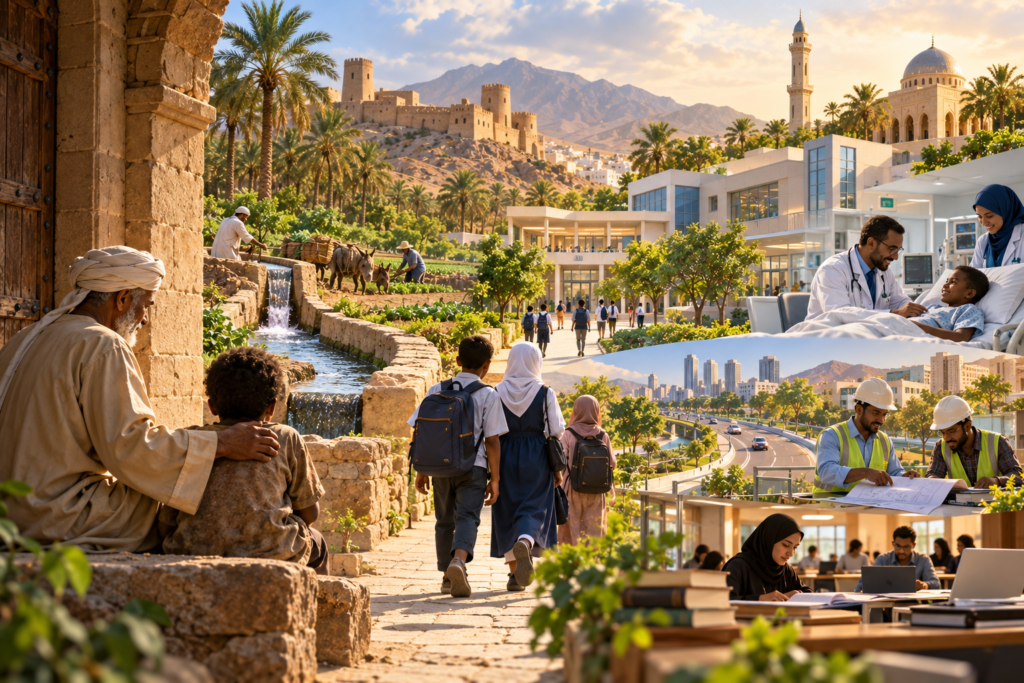
However, this latest war requires even greater prudence from the Gulf states, as they stand to be among the most affected. Attempts to extend the conflict into the Gulf aim to create chaos in the region and push it back to the pre-modernization era, making it unsafe and unattractive for investment. This would ultimately destroy what remains of Arab modernization and stability, especially as many Arab countries today suffer from security and economic decline, affecting investment, tourism, knowledge production, and cultural life.
Today, in the Arabian Gulf, we are in greater need of Gulf unity than ever before. We did not ignite this war, nor are we a party to it. Yet it presents an opportunity for the conflicting powers to draw us into it. None of these parties truly benefits from a stable Gulf region or from its intellectual and economic progress, nor from its transformation into a center for tourism and investment. There are attempts to create internal chaos which—if it were to occur, God forbid—would return us to stages of disorder and backwardness once again.
What I observe on social media platforms is troubling. Some Gulf-based accounts—including media, religious, and cultural voices—unfortunately encourage us to become cheering supporters of one side or another, as if we were watching a football match rather than witnessing a war that spares no one. Those managing this conflict today among the three sides often display recklessness and lack of prudence, and all of them draw upon theological narratives, using religion and sacred texts to justify the war—each according to its own textual and historical interpretations.
We must recognize that there are forces that wish to push this region backward, destabilize it, and create external loyalties within it—whether sectarian, political, or ideological. If that happens, we will see a Gulf region that is backward and unstable both politically and in terms of security. External ambitions are one matter if the people within the region are aware and resilient, but the real tragedy occurs when some of its own people contribute to the destruction of their Gulf home—whether knowingly for personal interests, or unknowingly due to sectarian and emotional motivations lacking sound judgment.
As I previously wrote on social media during this period:
“In times of crises and wars, when danger approaches your surroundings, there are— in my view—only two priorities: the nation (in loyalty and action), and unity behind the single central leadership without deviation from it, while avoiding anything that provokes division. What may be tolerated in times of peace becomes intolerable in times of hardship. What remains essential is the unity of the homeland and its soil. As for events beyond our borders, there are institutions better equipped to deal with them, and trusting them in such circumstances is essential. Our role is to be voices of goodwill and advocates of peace. War is a calamity that spares no one, and its expansion serves those who ignite it, making us fight among ourselves during times of crisis and spreading chaos to serve the interests of the conflicting parties. When emotions expand and reason diminishes, we may lose—God forbid—something called a homeland, which gathered us all on one harmonious and secure land.”
We are not required today to become political analysts without full awareness of all perspectives, nor to act as activists behind screens. Nor should we exploit such circumstances for personal visibility or use them as an opportunity to bring out personal or sectarian conflicts. What we truly need today— as mentioned earlier— is a rational and cohesive Gulf unity: to look first to our own home before looking outward, to act in accordance with the vision of the responsible institutions, and to avoid opportunistic voices that exploit public emotions. In times of war, patience, verification, unity, and trust in our national institutions are what help us emerge with the least damage—not self-promotion, nor the pursuit of superficial attention or fame at the expense of the homeland and its stability.