


By: Murtadha Al-Ramadhani
Satisfying curiosity and the desire for knowledge is an innate human instinct embedded within the human soul. Were it not for this instinct, we would not have been able to scale the peaks of mountains and uncover their secrets, nor would we have been able to dive into the seas and reach their depths. By nature, human beings seek knowledge in various fields and strive to get to know others of their own kind, regardless of differences in nationality, ethnicity, or religion.
Based on the words of God Almighty in verse 13 of Surah Al-Hujurat:
{“O mankind, indeed We have created you from male and female and made you peoples and tribes that you may know one another. Indeed, the most honorable of you in the sight of God is the most righteous of you”},
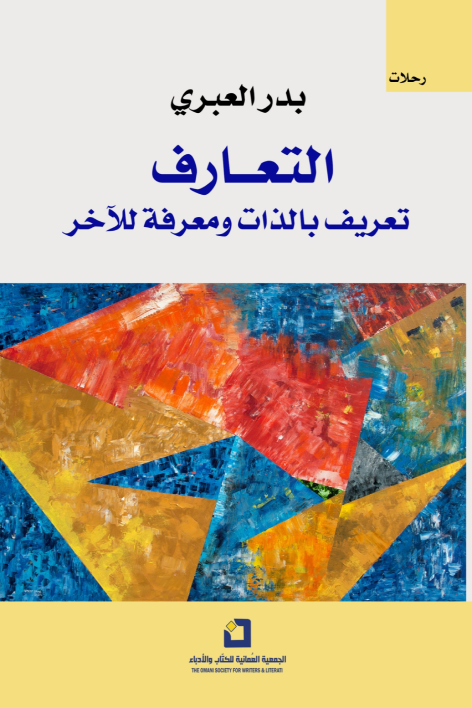
there is an emphasis on the necessity of knowing human beings and the customs and traditions that shape their societies. This is precisely what we find in the book Getting Acquainted by the Omani writer and researcher Badr bin Salem Al-Abri.
The book is summarized in four journeys:
- The Chicago journey
- The Dhofar journey
- The Bahraini journey
- The Texan journey
Each of these journeys contains numerous dialogues with the “other,” which revolve around doctrinal and religious contexts through the author’s visits to churches and places of worship. These visits reveal both the apparent and underlying differences of each sect, regardless of whether they fall under the same religion or not. This is clearly evident in the Chicago and Texan journeys, through encounters with a number of religions and sects such as Zoroastrianism, Mormonism, and many others. The author explores their beliefs and rituals, how these beliefs were formed, and what foundations and sources they stem from.
In the Dhofar journey, the author records his meetings with sheikhs and scholars in Dhofar Governorate, such as Sheikh Saeed Al-Ma‘ashani and the honorable Judge Ahmed Al-Khatib. Many topics are discussed, including the state of the Ummah and the extensive debates in religious matters caused by sectarian fanaticism. Perhaps one of the most compelling issues for me was the fact that our societies often pay little attention to young people’s existential questions, which may cause a distortion in the formation of their thinking, due to a gap created by marginalized questions left unanswered. I wrote an article on this topic entitled: Society’s Aversion to Young People’s Existential Questions (the full article can be found on the blog).
The Bahraini journey was exceptional in that it focused on the principle of coexistence within a single Arab society. What impressed me most was the principle of tolerance toward the other, regardless of religion or sect. The prevailing social mindset is built upon national unity and peaceful coexistence under the laws and systems of the state, with no distinction among members of the same society as long as the spirit of citizenship is deeply rooted within them.
In conclusion,
the book addresses many topics and issues related to the “other.” On the one hand, it opens intellectual horizons for the reader to explore the depth of human thought and belief in doctrines that may initially appear illogical or even absurd. On the other hand, it may lead the reader to philosophical dimensions that stimulate inquiry and satisfy curiosity.