


Bader al – abri
To begin with, I direct the esteemed reader to my two articles published in Oman Newspaper: “Zionism and the Question of the State: From Scientism to Religious Fundamentalism” and “The Rise of Antisemitism Between Hitler and Netanyahu.” Both articles provide an introduction to the general situation of Jews between global Zionism and ethnic Semitism. In order to avoid repeating the conceptual and historical grounding of these terms—which an article of this nature cannot bear—I turn here to a humanitarian issue related to the incident in which a number of Jews were killed while celebrating the national religious holiday known as the “Festival of Lights,” called Hanukkah in Jewish culture. The holiday is named after the candles lit during its days and symbolizes the victory of the Maccabees over the Greek Seleucids in the second century BCE, enabling the Jews to assert their freedom and resume the practice of their religious rituals.
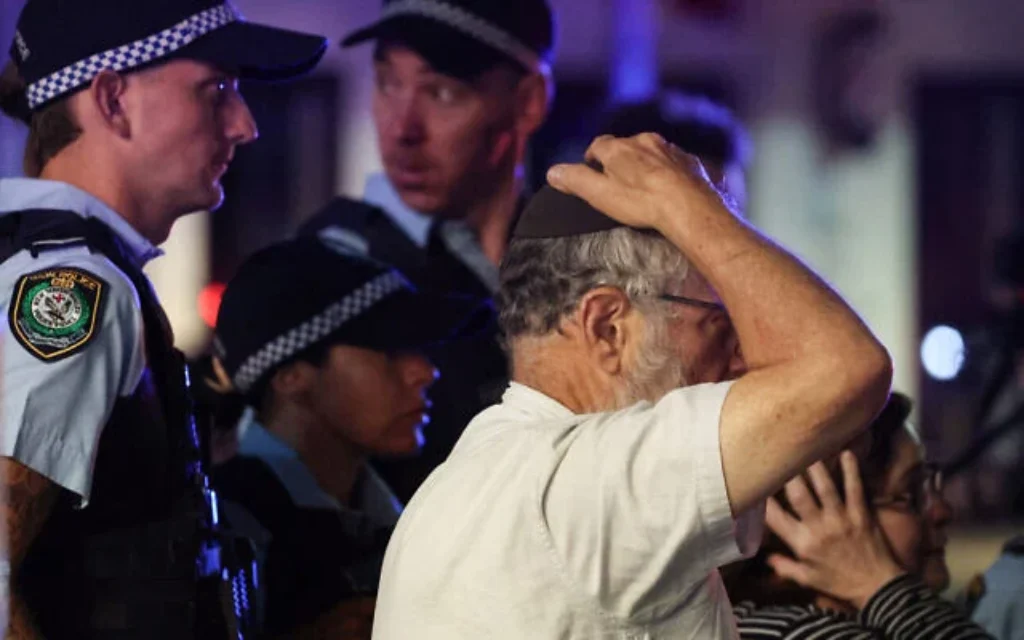
The incident occurred on December 14, 2025, at Bondi Beach in Sydney, Australia. It was carried out by a man named Sajid Akram, whose origins trace back to Hyderabad, India, and who migrated to Australia in 1998. He was joined in the attack by his son, Naveed Akram, an Australian citizen by birth. Sajid and Naveed opened fire, killing approximately sixteen people and injuring others. Amid these circumstances, a figure emerged who came to be known for his heroism: Ahmad Al-Ahmad, of Syrian origin, who managed to confront and stop Naveed Akram from continuing his crime by shooting. Ahmad Al-Ahmad’s heroic act halted a narrative that might otherwise have expanded in a way that would fuel what is termed Islamophobia.
The fundamental principle upon which there is no dispute is that this incident constitutes a crime against humanity, unjustifiable by reason or religion. All religions agree on upholding the sanctity of innocent life and the freedom to practice religious, and historical rituals. People who belong to a particular race, religion, or nation should not be held collectively responsible for crimes against humanity committed by others who share some affiliation with them in other parts of the world, such as what has occurred recently in Gaza since October 23, 2023, and the grave events that followed for more than two years.
It is essential to distinguish between the aggressor and the non-aggressor. The original state among human beings is peace, and the sanctity of life, honor, and property must be preserved. It is impermissible to spread terror or fear among those who are safe in any form. A clear distinction must also be made between a religion and those who adhere to it. The existence of texts within religions that may call for extremism—when read outside their contextual circumstances—does not mean that all adherents of those religions are extremists. All religions contain historical texts and situational events with interpretive and contextual frameworks; taken at face value, they may appear extreme or be exploited to incite extremism in differing circumstances. Likewise, the extremism of some adherents does not apply to all. Each incident must be understood within its specific context, away from scientifically and methodologically unsound generalizations.
As of now, the causes and motives behind this incident remain unknown. There are indications that ISIS may be behind it. In the Western collective mindset, ISIS has been wholly linked to Islam in order to magnify Islamophobia. At the same time, this incident has been exploited to promote “antisemitism” and to revive an old narrative, using such events to justify other crimes in the name of protecting Semitism itself, while drawing religions and historical issues into the matter. Therefore, the study of such cases should not be conducted outside a scientific methodology, and they must be deconstructed away from preconceived, often ideologically driven projections serving right-wing or left-wing agendas.
There are two important issues related to the incident from a broader perspective, which may also be closely connected. The first concerns the condition of Jews worldwide as a reaction to what is happening in Palestine in general, and in Gaza in particular. This was highlighted by Netanyahu in his address to the U.S. Congress in 2024: “Malicious lies are being affixed to the Jewish state these days. The absurd defamatory rhetoric that seeks to portray Israel as a racist and bloodthirsty state aims to delegitimize Israel and demonize the Jewish state and Jews wherever they may be. It is no surprise, then, that we are witnessing a frightening rise in antisemitism in the United States and around the world.”
Naturally, this situation places Jews in an unsafe position globally. Consequently, many travel using different passports and nationalities and do not openly display their religious identity or Jewishness. This is linked to another issue: public discourse that lacks logical and rational rigor, emerging from political and religious rhetoric inclined toward generalization and random conflation. Such discourse creates a negative image in the collective mindset, leading to extremist behaviors that may escalate to killing and the use of violence in parts of the world. These populist narratives may also be exploited by political actors or militant organizations to achieve political objectives, making it easier to recruit some empty collective minds in the name of religion, sect, or metaphysics in general.
Today, we are in need of well-grounded humanitarian discourse. What happened at Bondi Beach has no connection to Islam or Muslims, just as what happened to the Jews on the beach is an indefensible crime. Human life is one and the same. The same principle applies to the crimes committed in Palestine against an unarmed people; these crimes do not represent all Jews, nor do they justify violence against Jews simply because they were born Jewish. The right to life belongs to everyone, and the garments of religion do not strip away the intrinsic essence of human identity. Violence recognizes no ideology, religion, or sect, even though religious and historical texts may be exploited to justify it. Just as these texts must be reread in ways that safeguard human dignity, reality itself must be approached rationally, away from preconceived judgments and unreflective discourse.