Badar AL Abri
My use of the term minorities follows its common usage in academic studies and scholarly discussions when analyzing social phenomena or demographic components, whether at the regional level or within the framework of the modern nation-state. From the perspective of citizenship grounded in our shared humanity, however, there are neither majorities nor minorities; rather, all individuals are equal citizens. I have discussed this idea in my books Theology of Mercy and Humanizing the State.
Anyone who studies the Arab world—from the Atlantic Ocean to the Arabian Sea and the Arabian Gulf—will encounter remarkable linguistic, ethnic, religious, sectarian, theological, jurisprudential, and mystical diversity, in addition to the wide range of contemporary intellectual, social, and political movements. My concern here, given my current research interests, is with the region’s long-established religious diversity, which has coexisted with us for centuries, particularly in Iraq, the Levant, Egypt, and parts of North Africa. The Arabian Gulf also possesses its own distinctive religious landscape because of its historical proximity to the Indian and Persian worlds, and more recently to Asia in general, together with labor migration that has created significant demographic and cultural diversity.
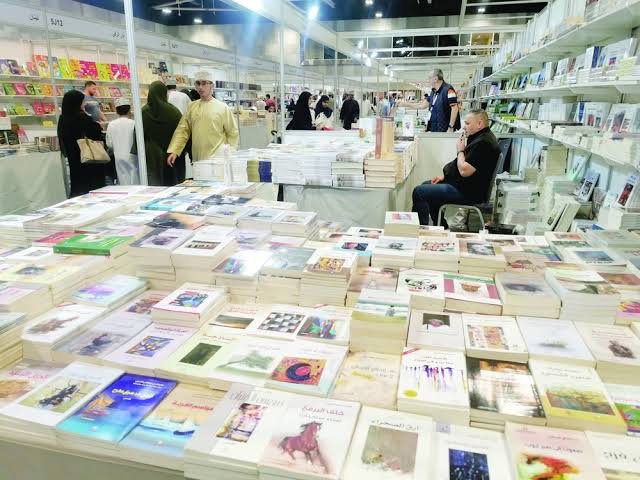
Reflecting on book fairs across the Gulf over many years, I have noticed a striking lack of openness toward the intellectual production of these communities, especially the Christian communities that have long been an integral part of large areas of the Arab world. By the intellectual production of these communities, I mean the works they themselves produce to express their own theological, liturgical, and social perspectives—not merely books written about them. While some publishing houses occasionally include such works within their general catalogues, many titles are either not permitted to be sold because they are considered doctrinally controversial or ideologically incompatible with the identity promoted by the nation-state. In some cases, these restrictions even extend to differences within Islamic schools and movements themselves.
In the past, I assumed that some of these religious communities had failed to introduce themselves effectively and that one manifestation of this shortcoming was their absence from Gulf book fairs. However, after attending the Baghdad International Book Fair in September and the Cairo International Book Fair in January, I spoke with representatives of several publishing houses associated with these communities. According to them, they are often not permitted to participate or simply receive no positive response from some organizing authorities. This, they explained, contributes directly to the limited representation of these communities at Gulf book fairs. In my view, this reflects the persistence of closed identities, fears of fundamentalist movements that reject the religious or cultural other, and a broader failure to promote knowledge of religious diversity, even at political and cultural levels.
In my opinion, this lack of openness stems from three main causes: fear of the different other, closed identities, and the failure to distinguish citizenship from communal affiliation.
The first is fear of those who are different. Some believe that merely allowing different perspectives a limited space inevitably leads to intellectual, doctrinal, or social corruption. Yet we are not discussing institutions that actively encourage people to adopt other religious or cultural identities. Rather, we are speaking about temporary book fairs that simply provide an opportunity to understand others, or allow communities to present themselves directly to scholars and seekers of knowledge. Today, knowledge is already universally accessible through digital media in written, audio, and visual forms. It therefore makes little sense to fear its presence at a brief annual exhibition or an occasional cultural event that welcomes diversity.
The second cause is the persistence of closed identities. Identity itself is entirely natural, and there is nothing inherently problematic about communities preserving their own internal traditions. The problem arises when an identity—supported by political authority, demographic dominance, theological exclusivism, or social and economic interests—seeks to reshape the entire society in its own image. If such an identity fears neighboring traditions that differ only slightly from it, it will naturally fear communities that differ even more substantially. Consequently, the presence of diverse identities within a cultural exhibition becomes a source of anxiety. This anxiety deepens when identity is confined within rigid binary oppositions such as “self and other,” “believer and unbeliever,” or “loyalty and disavowal.” Such binaries are fundamentally incompatible with the dynamic nature of contemporary cultural and social life.
The third cause is the failure to distinguish citizenship from communal affiliation. Citizenship is far broader than any religious, ethnic, or cultural identity because it is rooted in the dignity of the individual and constitutes the foundation of the modern state and its constitutional order. Individuals are free to maintain whatever affiliations they choose. Once citizenship is distinguished from identity, knowledge too becomes independent of communal boundaries. Citizenship belongs within the framework of the nation-state, whereas knowledge transcends national borders and belongs to the world as a whole. Knowledge cannot be confined within geographical frontiers, nor can it be restricted by narrow identity-based boundaries that represent only a small part of the human experience.
Knowledge produced by religious and cultural communities therefore forms an essential part of humanity’s shared intellectual heritage. Nations that possess genuine confidence in their national identity do not fear engagement with broader fields of knowledge. On the contrary, such openness strengthens both national belonging and cultural confidence. Understanding others, engaging with them intellectually, and learning from their experiences contributes to a stronger, more advanced, and more mature society. It enables states to move toward genuine coexistence through informed understanding rather than suspicion. By contrast, societies that remain closed and apprehensive toward diversity often limit not only their cultural development but also their economic and investment opportunities, as intellectual isolation tends to reinforce broader forms of isolation.
Translated with the assistance of Artificial Intelligence.