Badar Al Abri
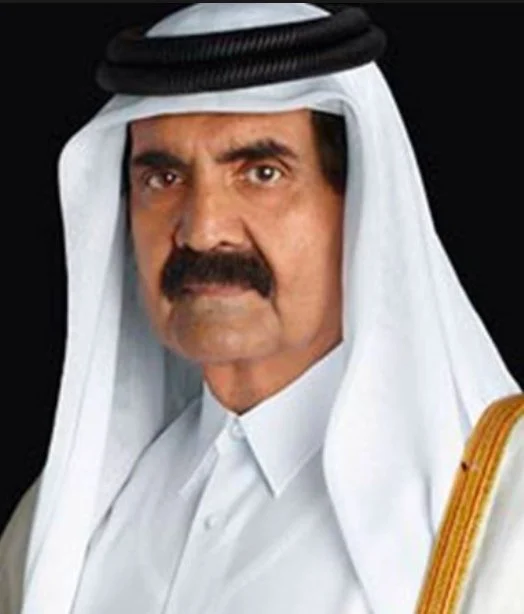
The Gulf region bid farewell on Sunday, 12 July 2026, to Sheikh Hamad bin Khalifa Al Thani, the former Emir of Qatar, who passed away at the age of seventy-four. His years in power were anything but ordinary. Unlike leaders content with preserving the status quo while introducing only incremental reforms, Sheikh Hamad embarked on an ambitious modernization project that transformed Qatar into a global hub for culture, research, economic development, and international sports. Remarkably, this transformation unfolded within just eighteen years, from 27 June 1995 to 25 June 2013.
Between 1979 and 1995, the Gulf underwent three defining transformations: the rise of the Islamic Awakening (Ṣaḥwa), the Iranian Revolution, and the Afghan Jihad. Before these developments, the region had already experienced the influence of Arab nationalist and leftist movements. While leftist currents were less pronounced in Qatar than in neighboring Bahrain and Kuwait, Arab nationalism—particularly inspired by Nasserism—maintained a significant presence through cultural clubs and intellectual circles. Prominent figures associated with this current included Hamad bin Ali Al-Attiyah (d. 1996), Abdullah Al-Musnad, and Ali Khalifa Al-Kuwari, among others.
Qatar also maintained close historical ties with Abdul Rahman Al-Baker (d. 1971). Although a Bahraini by nationality, Al-Baker’s family originated from Al Zubarah in Qatar. He spent part of his life there and founded the Qatar Contracting Company. Similarly, the Omani intellectual and businessman Hussein Haidar Darwish (d. 1999) established deep connections with Qatar through his commercial activities, particularly in the air-conditioning and refrigeration business. A close associate of Al-Baker, he also cultivated relationships with Qatari nationalist figures and members of the ruling family.
Qatar’s nationalist movement experienced alternating periods of growth and decline, largely because its calls for political, constitutional, and institutional reform often conflicted with the governing traditions of Gulf monarchies. Yet, despite these constraints, a reformist nationalist impulse continued to shape segments of Qatar’s political and intellectual landscape, leaving an imprint that can still be discerned today.
Another major influence on Qatar came with the migration of leading figures from the Muslim Brotherhood, who sought refuge there following increasing political repression in Egypt. Foremost among them was Yusuf al-Qaradawi (d. 2022), who arrived in Qatar in 1961 and played a pivotal role in shaping the country’s Islamic Awakening (Ṣaḥwa). He soon emerged as one of the most influential figures of the contemporary Islamic revival, standing in intellectual contrast to Arab nationalist—particularly Nasserist—currents. Al-Qaradawi also helped cultivate a dynamic activist trend within Gulf Salafism at a time when traditional Salafi scholarship generally rejected political organizations, including the Muslim Brotherhood, although it initially expressed sympathy toward the movement on religious grounds.
Al-Qaradawi was not alone in this endeavor. He was joined by several prominent figures of the Ṣaḥwa movement, including Muhammad Surur Zayn al-Abidin (d. 2016), Muhammad Qutb (d. 2014), and Abdul Rahman Abdul Khaliq (d. 2020). The latter was denied entry into Qatar after the Saudi authorities ordered him to leave Medina following the events of 1964. He subsequently settled in Kuwait, where he established the activist Salafi movement beginning in 1965. As a result, Kuwait, Qatar, and Saudi Arabia became the principal centers of the Gulf Ṣaḥwa, whose influence later extended to the United Arab Emirates, Yemen, and the wider region.
The Ṣaḥwa movement, in its various forms, generated widespread debate, particularly after the Juhayman al-Otaybi incident (d. 1980) and the success of the Iranian Revolution led by Ayatollah Khomeini (d. 1989). During this period, Islamic revivalism was increasingly employed as a political alternative to both traditionalist and revolutionary narratives. Juhayman’s thought came to symbolize a rigid anti-modernist current, while the Ṣaḥwa movement proved more capable of mobilizing young people against the perceived expansion of the Iranian Revolution and encouraging support for the Afghan Jihad.
This current, however, encountered a major turning point following the Gulf War (1990–1991) and the decision to invite foreign military forces into the region. Subsequent events, including the Letter of Advice (1992) and the Buraidah Uprising (1995), profoundly reshaped the trajectory of Islamic activism in the Gulf.
The accession of Sheikh Hamad bin Khalifa Al Thani to power in 1995 marked what may be regarded as the third major turning point in Qatar’s modern history, the full impact of which became evident with the dawn of the twenty-first century. My focus here is not on the country’s remarkable achievements in infrastructure, politics, the economy, or sports, but rather on the broader manifestations of modernization that shaped the Gulf and the Arab world—both positively and negatively. These developments can be understood through two principal dimensions.
The first was the launch of Al Jazeera on 1 November 1996. The network introduced an unprecedented degree of editorial freedom, unlike anything previously seen in the Gulf, and quickly emerged as one of the region’s most influential media outlets. It played a significant role in reshaping Arab political discourse, became a prominent platform during the Arab Spring, and gave extensive coverage to Islamist movements, particularly the Muslim Brotherhood. This transformation also stimulated the emergence of competing regional broadcasters, including Al Arabiya in 2003 and Sky News Arabia in 2012. Following the attacks of 11 September 2001 and the Iraq War in 2003, the United States launched Alhurra in 2004 as part of an effort to promote an alternative media discourse to counter Islamist and Ṣaḥwa-oriented narratives. Collectively, these satellite channels generated a new intellectual and political dynamism across the Gulf and the Arab world, encouraging a series of important reassessments and transformations.
The second dimension was Qatar’s deliberate effort to attract not only religious and Islamist figures but also leading independent intellectuals and cultural elites, including Arab nationalists and left-leaning thinkers. Among the most prominent was the Palestinian intellectual Azmi Bishara, who established close ties with Sheikh Hamad after settling in Qatar in 2007. In 2010, he founded the Arab Center for Research and Policy Studies, which has since become one of the Arab world’s leading research institutions. The Center later gave rise to the Doha Institute for Graduate Studies, specializing in the humanities and social sciences and attracting hundreds of students and researchers from across the Arab world each year. Bishara also became associated with the launch of Al Araby Television in 2015, while Qatar continued to establish additional research institutions that further strengthened its position as a regional center for scholarship and intellectual exchange.
Although Qatar’s modernization project has never been guided by a single, coherent intellectual vision and has continued to encompass diverse ideological currents ranging from the political right to the left, Sheikh Hamad succeeded in creating an environment unprecedented in the Gulf. It offered a considerably broader space for freedom of expression—particularly regarding regional and international affairs—and was embodied most clearly in the country’s media and research institutions. Whether viewed positively or critically, these two spheres profoundly influenced many of the political and intellectual transformations that reshaped the Gulf and the wider Arab world, developments that continue to merit careful, balanced, and critical reassessment.
Translated with the assistance of Artificial Intelligence.